TV Mounting Zone is an independent, easy-to-read guide that explains what TV mounting is, how mounts are used, the benefits they offer, where they're available, and how the main mount types compare — no sales pitch, no brands, just clear information.
Mounting a television isn't only about looks. Here are the practical reasons people choose a wall mount over a stand or cabinet — so you can decide whether it suits your space.
A mounted TV frees up the console, cabinet, or table it would otherwise sit on — a real advantage in smaller rooms and apartments.
Mounts let you set the screen at eye level and adjust its tilt or swivel, reducing neck strain and glare from windows or lights.
A screen fixed to the wall is far harder to knock over — a common reason families with children or pets prefer mounting.
With cables managed, a mounted TV gives a tidy, built-in appearance similar to a framed picture on the wall.
Mounts open up spots a stand can't reach — above a fireplace, in a corner, or high in a bedroom, kitchen, or office.
Keeping the TV off an enclosed shelf lets air circulate around it, which can help electronics run cooler.
A wall mount can be used in almost any room. Here are the settings where mounted televisions show up most often — and what makes each one a good fit.
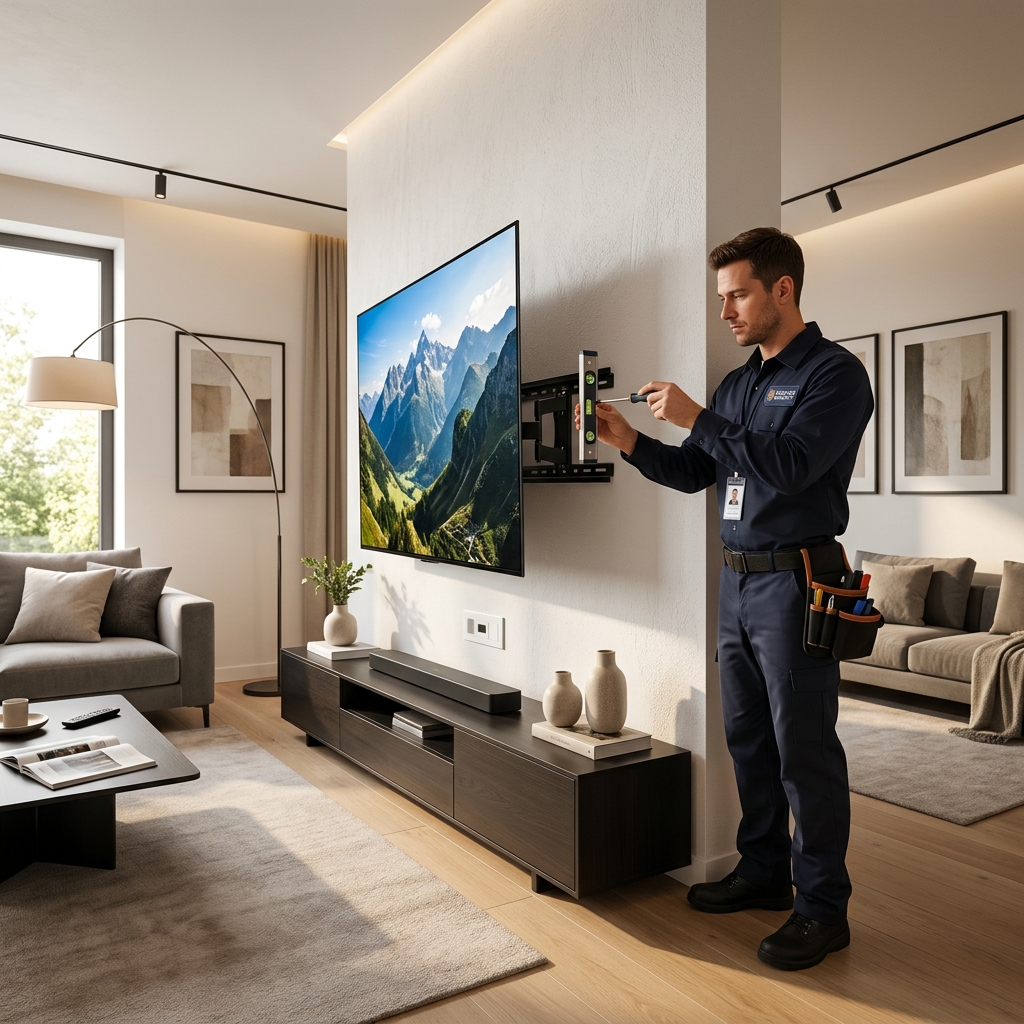
The most common place for a mounted TV. Placing the screen on the main wall clears the media console and centers the picture for comfortable group viewing.
Learn More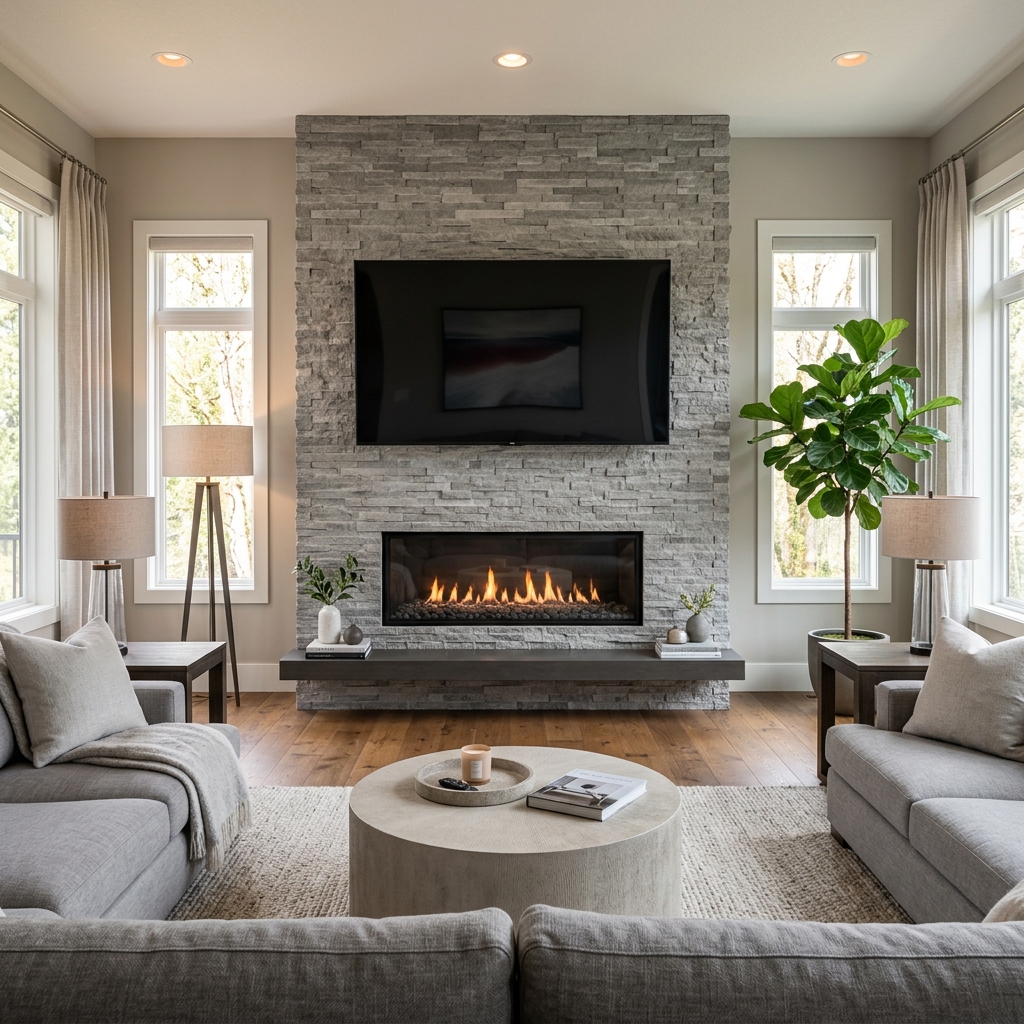
A popular way to use otherwise empty wall space. Because of heat and height, this spot usually calls for a tilting or pull-down mount — points we cover in the comparison.
Learn More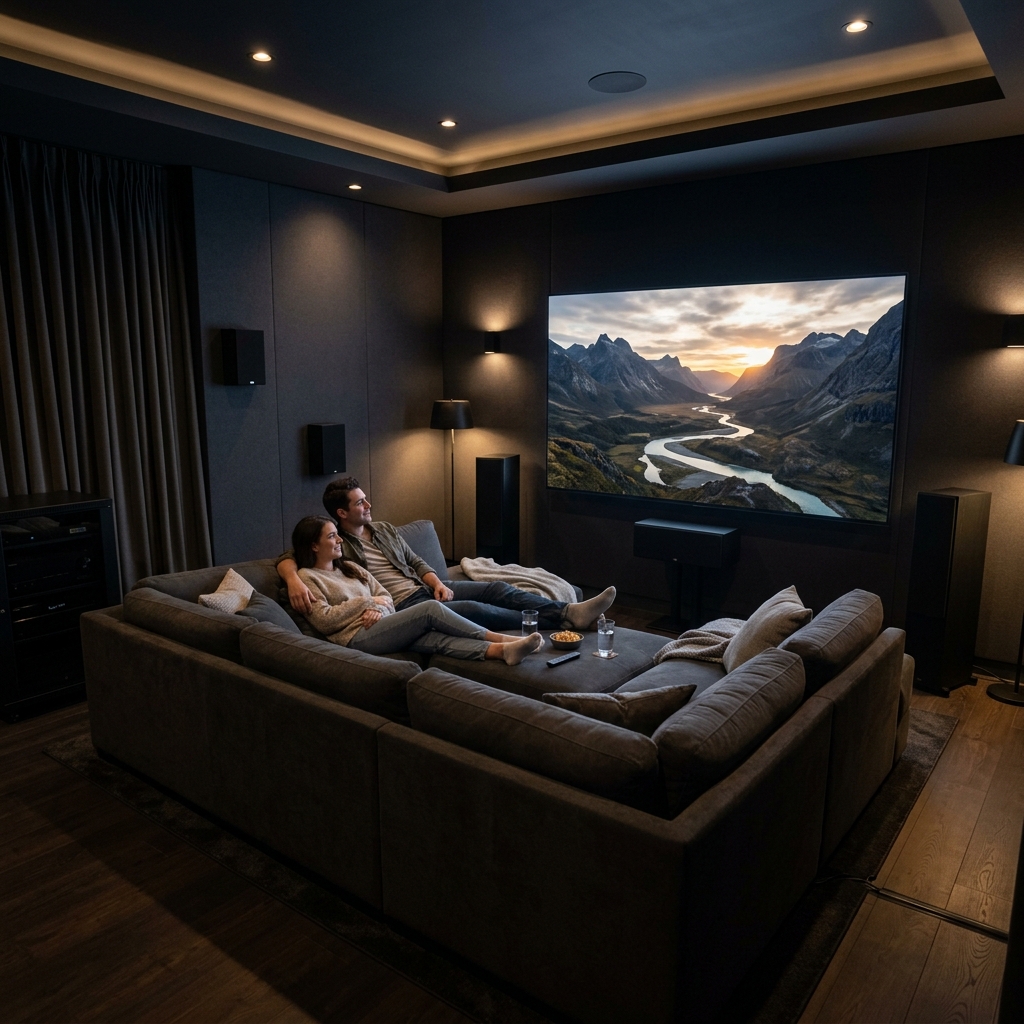
In a dedicated viewing room, mounting keeps the screen at a fixed, glare-free height and pairs neatly with speakers for an immersive layout.
Learn More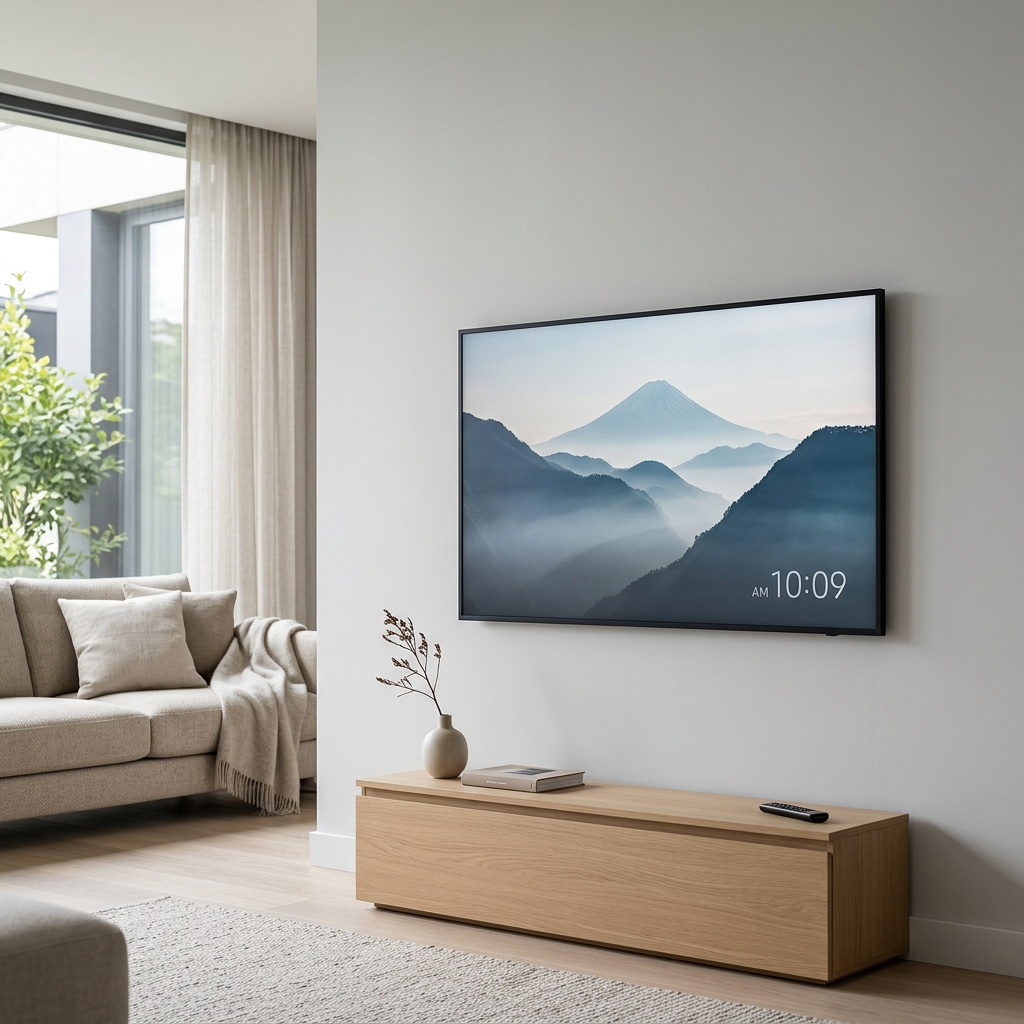
Mounting higher on the wall lets you watch comfortably from bed and keeps a smaller room feeling open and uncluttered.
Learn More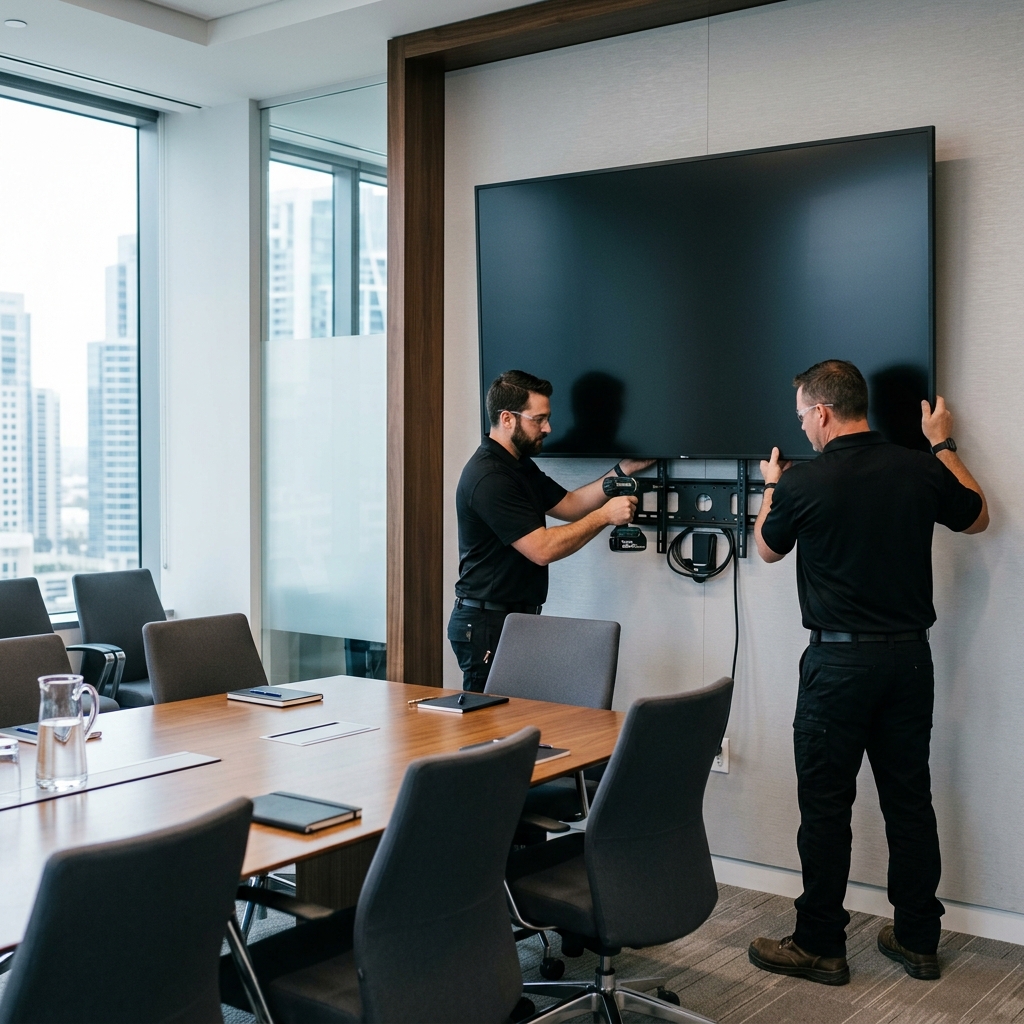
Conference rooms, reception areas, restaurants, gyms, and shops use mounts to place screens where they're visible, out of reach, and space-efficient.
Learn More
In busy areas, an adjustable mount lets a screen swing out to be seen from different spots, then fold back flat when it isn't in use.
Learn More
TV mounting is the practice of attaching a television to a wall (or occasionally a ceiling) using a metal bracket instead of resting it on a stand or cabinet. The bracket bolts securely into the wall structure, and the TV clips onto it — holding the screen firmly in place at a chosen height and angle.
Whether it's done yourself or by a professional, mounting a TV generally follows the same four stages. Here's what each one involves.
Decide the room spot, viewing height, and mount type, then check the wall — locating studs or choosing the right anchors for the surface.
The mount's base plate is levelled and bolted firmly into the wall so it can safely carry the television's weight.
Brackets screw onto the back of the TV (using its VESA holes), and the screen is lifted onto the wall plate and secured.
Cables are plugged in and routed neatly, the TV is levelled and angled, and every connection is tested before it's used.
Our brand-neutral comparison breaks down fixed, tilting, full-motion, and ceiling mounts side by side — plus a look at DIY versus hiring a professional — so you can weigh the options yourself.
 TV Mounting